


How to Switch Dog Food Without a Week of Tummy Trouble
You open a new bag of dog food, fill the bowl and watch your dog finish dinner. Easy. Then midnight arrives, followed by a restless dog, a dash to the garden and a mess nobody wanted to clean up.
A sudden food swap is not always a disaster, but it is an unnecessary gamble. The old and new foods may differ in fat, fibre, protein, moisture and calorie density. Even a dog with an iron stomach can notice that much change at once. A slower switch gives the digestive system time to catch up and gives you a chance to spot trouble early.
So, before throwing away the old bag, keep enough for a transition. Here is how to do it without making mealtimes complicated.
Begin with less new food than you think
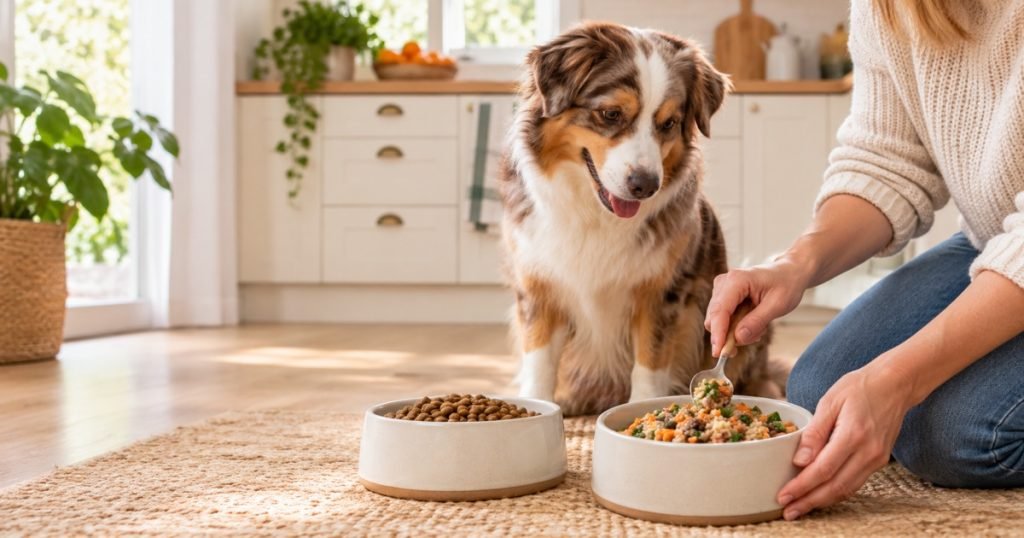
On the first day, the new food should be the smaller part of the meal. For most healthy adult dogs, a reasonable starting point is roughly one part new food to three parts old food.
Mix it through rather than leaving two obvious piles. Some dogs will otherwise eat the interesting part and abandon the rest.
If all looks normal after a few meals, increase the new food gradually. A typical schedule looks like this:
- Days 1–3: 25% new food and 75% old food
- Days 4–6: Half new food and half old food
- Days 7–9: 75% new food and 25% old food
- Day 10: The new food on its own
There is nothing magical about day ten. It is simply a useful target. One dog may be ready sooner; another may need two full weeks.
A sensitive stomach, recent illness, stress or a large difference between the two recipes are all good reasons to move more slowly.
Owners moving from kibble to fresh or raw meals can also look at Ardam’s step-by-step raw feeding transition guide for an example of how to divide the change into manageable stages.
Use any schedule as a starting point, though. Your dog’s response matters more than a date on the calendar.
What should you watch for?
The obvious answer is poo, but it is not the only clue.
Notice whether your dog is eating willingly, drinking normally and behaving like themselves. Mildly softer stools for a short time may settle when you hold the current ratio for an extra day.
Repeated vomiting, ongoing diarrhoea, pain, blood in the stool or marked tiredness is different. Stop experimenting and call a veterinarian.
A simple note on your phone can help. Record what was fed, how much was served and anything unusual that happened afterwards.
This is especially useful in a busy household where two people may feed the same dog and assume the other person has not already done it.
Keep the rest of the menu boring
A food transition is a poor time to introduce a new dental chew, liver treat and leftovers from Sunday lunch.
If the dog develops gas or an upset stomach, you will not know which change caused it.
For a week or two, stick with familiar treats and keep them modest. Feed at fairly regular times as well. Routine makes patterns easier to see.
It also stops a fussy dog from turning one refused bowl into a better offer five minutes later.
That last point matters. If walking away from dinner produces cheese or roast chicken every time, your dog may learn to wait.
Stay calm, remove uneaten food according to its storage instructions and try again at the next normal meal.
This advice is not suitable for every animal. Puppies, toy breeds, frail senior dogs and dogs with medical conditions can become unwell if they do not eat. Ask your veterinarian how long is safe for your particular dog.
Check the serving size again
A cup of one food may contain a very different number of calories from a cup of another.
Wet and fresh foods also carry far more water than dry kibble, which changes the weight and volume of a normal serving. Copying the old scoop without reading the new feeding guide can lead to accidental overfeeding or underfeeding.
Use the package directions as an opening estimate rather than a permanent rule. Over the following weeks, watch your dog’s body condition and weight.
Ribs should generally be easy to feel without being sharply visible, and there should be a noticeable waist when viewed from above. A veterinarian can demonstrate how to assess your dog’s body condition correctly.
Do not let attractive labels make the decision
Words such as “premium,” “natural” and “holistic” sound positive, but they are not a nutritional assessment.
Look for a clear ingredient list, sensible feeding guidance and information showing whether the food is complete and balanced for your dog’s life stage.
A topper or complementary food may be useful, yet it is not automatically suitable as the entire diet.
Medical history also changes the answer. Dogs with pancreatitis, kidney disease, allergies or other diagnosed conditions may need a diet selected with professional advice.
In that situation, an internet trend should never overrule the veterinarian who knows the dog.
Raw food needs stricter kitchen habits
Switching to raw food adds a food-safety question as well as a nutrition question.
The US Food and Drug Administration warns that raw pet food can contain bacteria including Salmonella and Listeria. Treat it as carefully as raw meat intended for the family.
Wash your hands with soap after handling it. Clean bowls, utensils and work surfaces. Keep raw pet food away from ready-to-eat human food, and thaw frozen portions in the refrigerator rather than on the kitchen bench.
Follow the manufacturer’s storage directions and do not leave a half-eaten raw meal sitting around, particularly on a warm day.
Households with young children, older adults, pregnant people or anyone with a weakened immune system should take extra care and discuss the risks with an appropriate health professional and veterinarian.
Read More: North India Monsoon 2026: Punjab, Haryana & UP Rainfall Forecast
When “wait and see” is the wrong choice
Not every stomach problem that appears during a food change is caused by the food.
Dogs pick up rubbish, swallow objects and become ill for unrelated reasons. Seek veterinary help promptly if your dog has repeated vomiting, persistent diarrhoea, blood in the stool, a swollen abdomen, obvious pain, breathing difficulty, unusual weakness or a prolonged refusal to eat.
If the dog looks seriously unwell, do not wait for the next stage of a feeding schedule. A general feeding article cannot diagnose the cause.
Make ordinary meals the goal
Changing dog food successfully is not very exciting, and that is the point.
There should be no dramatic overnight test and no pressure to reach 100% new food by a fixed date. Begin with a small amount, keep other variables steady and adjust the pace when your dog needs it.
Soon enough, the unfamiliar smell and texture should become just dinner.
A calm bowl, a comfortable dog and a routine you can repeat are better signs of success than completing the switch in record time.